

Tau! Vinho
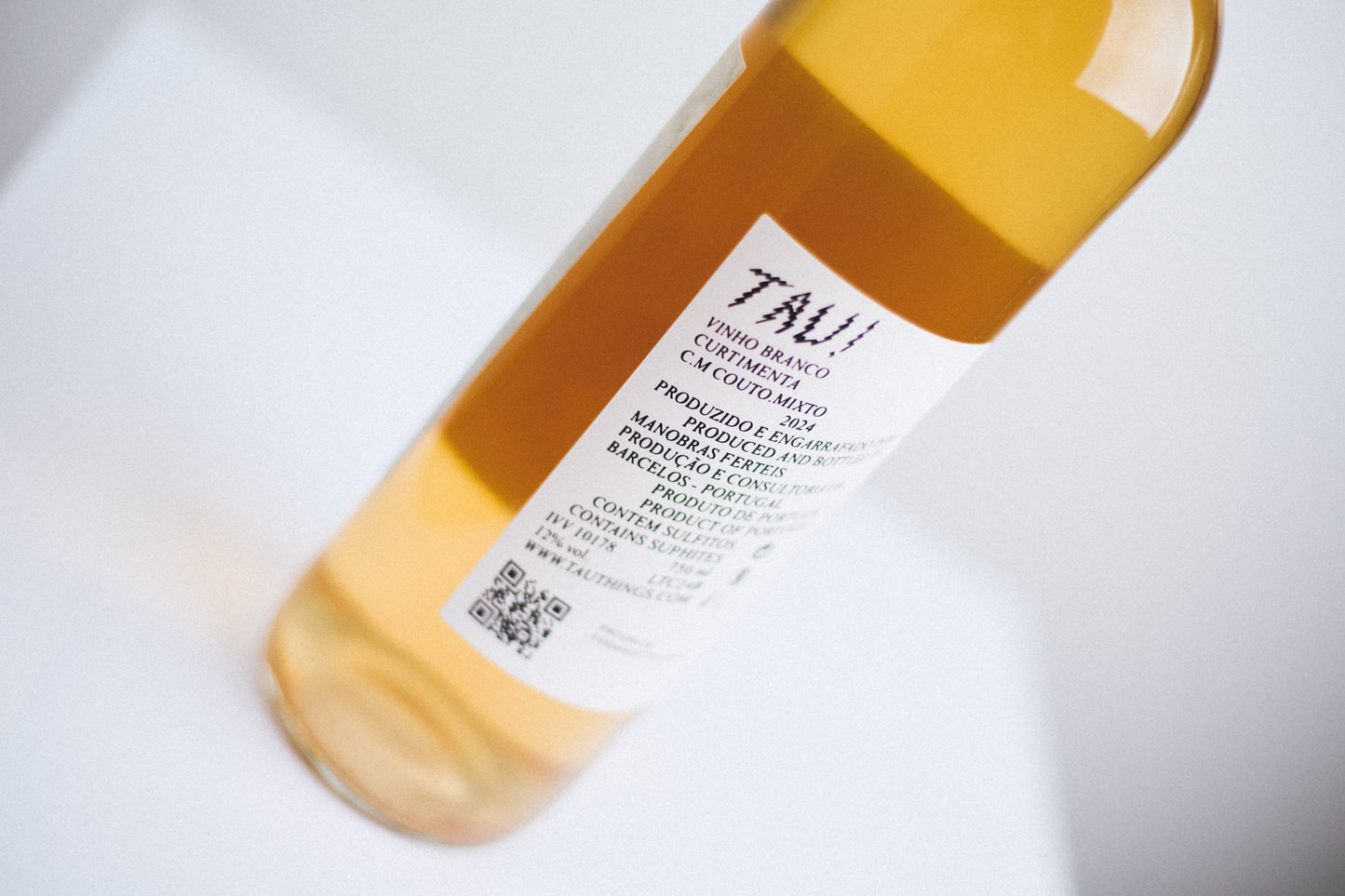
TAU! 2024 Curtimenta (Orange)
TAU! 2024 Curtimenta (Orange)
Couldn't load pickup availability
The Wine
TAU! Curtimenta 2024 is a skin-contact white wine crafted through a careful and meticulous process, made possible only by the small scale of its production. The grapes — Loureiro — come from a vineyard located in the municipality of Vila Verde, in the Cávado sub-region, at 800 meters of altitude, where elevation and time shape a dense and profound wine.
All grape clusters were hand-harvested into small crates. After destemming, the grapes remained in contact with their skins throughout the entire alcoholic fermentation, which occurred spontaneously with indigenous yeasts. Once fermentation was complete, the must was pressed in a manual vertical press.
The wine then aged for 10 months in used French oak barrels, until the day of bottling.
Production: 650 bottles
Tasting
TAU! Curtimenta 2024 shows a profile marked by the complexity drawn from skin maceration and aging in used oak. On the nose, subtle notes of honey, carob, cedar, and dried fruits emerge, wrapped in a structured and deep matrix.
On the palate, it is full-bodied, intense, and textured, its unctuousness balanced by a well-integrated natural acidity that lends tension and persistence to the whole.
Artwork
Fernando Travassos is the artist behind this edition of TAU!, approaching the label as if it were a small painting. The starting point was rectangular pieces of cut paper — rather than seeking a perfect edge, the artist chose to keep the irregularities of the margins, small distortions that became part of the label's own design.
On these surfaces, Travassos worked with oil, dyes, and ink dilutions, creating stains, gestures, and chromatic variations that converse with the liquid inside the bottle. Throughout the process, compositions were placed side by side on the studio wall, revealing how the different images related to one another. A decisive moment came when bottles were brought into the studio, allowing the paintings to be tested directly on the final object — seeing the real scale, the curvature of the glass, and the relationship between color and wine informed many of the decisions.
More than creating a graphic design, the aim was to carry the logic of painting onto the label, preserving the gesture, the experimentation, and the openness to interpretation that define the artist's work.
Share